





₦2.3tn Security Fund Uncovered as Fresh Killings Expose Deepening Crisis
₦2.3tn Security Fund Uncovered as Fresh Killings Expose Deepening Crisis
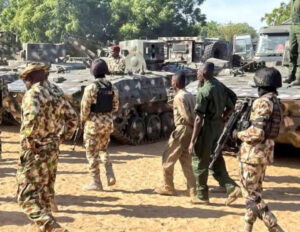
Nigeria’s security architecture has come under renewed scrutiny following revelations that military and paramilitary agencies received about ₦2.3 trillion in special intervention funding within a two-year period, even as violent attacks continue to claim lives across parts of the country.
Documents obtained from the Federation Account Allocation Committee indicate that the funds were disbursed in structured tranches between late 2023 and 2025, reflecting a sustained financial commitment by the Federal Government to tackle insecurity. According to The PUNCH, the intervention was released in batches of ₦100 billion, with each inflow quickly transferred out for operational use, leaving no standing balance in the account.
The records show that the funding programme was executed in phases, eventually accumulating to ₦2.3 trillion. Despite the scale of the disbursement, there was no detailed breakdown of how the funds were allocated among the armed forces or other security agencies, nor clarity on the specific operations they supported.
Separate entries also revealed that an additional ₦450 billion was released in 2025 for non-regular allowances to security personnel, alongside ₦40 billion channelled through the Office of the National Security Adviser for security operations, a development also reported by Daily Trust and The Nation.
Yet, the heavy spending comes at a time when insecurity remains a major concern for citizens and businesses. Data from the Central Bank of Nigeria’s Business Expectations Survey, cited by The Guardian, ranked insecurity as the most significant constraint to business activity in February 2026, ahead of taxation, power supply, and interest rates.
Fresh attacks in Plateau and Kaduna states have further heightened concerns.
In Plateau State, gunmen launched a deadly assault on residents of Angwan Rukuba in Jos North, leaving multiple casualties. While initial reports suggested a lower death toll, local sources and community leaders later indicated that the number of fatalities may be significantly higher. According to The PUNCH, figures varied between official police confirmation and accounts from community groups, reflecting the confusion that often follows such incidents.
Eyewitnesses described scenes of panic as attackers reportedly stormed the area on motorcycles, opening fire on unsuspecting residents. Survivors recounted how people fled in different directions in a desperate attempt to escape the violence.
Security operatives were subsequently deployed to the area, while the Plateau State Government imposed a curfew to restore order. Governor Caleb Mutfwang condemned the attack, describing it as a tragedy that affected the entire state, not just the immediate community.
The incident also disrupted academic activities, with the University of Jos suspending scheduled examinations due to safety concerns, a development highlighted by The Guardian.
In Kaduna State, a separate attack targeted a social gathering in Kahir community, Kagarko Local Government Area. Residents said armed men invaded a wedding event, firing indiscriminately and abducting several people. Reports indicate that more than a dozen individuals were killed, while others sustained injuries.
Community leaders described the attack as a sign of growing vulnerability in rural areas. As reported by Daily Trust, locals expressed fears that social gatherings are increasingly becoming targets, forcing many to reconsider public events.
The Christian Association of Nigeria also reacted strongly to the violence, particularly the Plateau attack which coincided with Palm Sunday. In a statement referenced by The Nation, the group described the killings as deeply troubling and called for swift justice, warning that continued attacks could erode public confidence in security institutions.
The association questioned how such incidents continue to occur despite ongoing interventions, urging authorities to adopt more proactive measures rather than reactive responses.
Security agencies say investigations are ongoing in both states, with efforts underway to track down the perpetrators. However, the persistence of such attacks, despite substantial government spending, has intensified debate over the effectiveness of Nigeria’s current security strategy.
For many observers, the contrast between rising financial commitments and continued violence raises critical questions about accountability, coordination, and the overall impact of intervention funds on improving safety across the country.
TRENDING SONGS
 Malami Breaks Silence on INEC–ADC Dispute, Urges Calm Amid Political Tensions
 £746m Nigeria–UK Deal Sparks Debate Over Ajaokuta Steel’s Future
 FG Kicks Off 56km Ekiti–Osun Link Road to Boost Regional Trade
 Tinubu Condemns Plateau and Kaduna Attacks, Calls for Urgent Action Against Violence
 Tonto Dikeh Opens Up on Dark Past: From Cult Involvement to Spiritual Renewal
 Alleged Truck Tampering Lands Lagos Man in Court Over Theft Claims
 Senegal Tightens Anti-LGBTQ Laws, Doubles Prison Terms Amid Rights Concerns
 Infantino Watches Iran Friendly Amid World Cup Venue Uncertainty
 El-Rufai Returns to ICPC Custody After Mother’s Burial, Faces Fresh Court Proceedings
 Kwankwaso Says Plateau Bloodshed is a National Emergency
Share this post with your friends on