












Empty Desks, Closed Gates: See Reasons South Korea Shuts Over 4,000 Schools
Empty Desks, Closed Gates: See Reasons South Korea Shuts Over 4,000 Schools
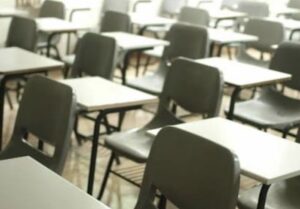
South Korea has shut down more than 4,000 schools nationwide as a steady decline in student enrollment continues to shrink the country’s education system, leaving many former school buildings deserted.
Figures from the Ministry of Education, obtained by lawmaker Jin Sun-mee, show that a total of 4,008 elementary, middle, and high schools have ceased operations due to falling numbers of school-age children. Elementary schools make up the bulk of the closures, accounting for 3,674 shutdowns, followed by 264 middle schools and 70 high schools.
In just the past five years, 158 schools have closed, and projections indicate that another 107 schools may shut their doors within the next five years if current trends persist. The situation is particularly severe outside major urban centres, where population decline is more pronounced. North Jeolla Province is expected to see the highest number of future closures, with 16 schools at risk, followed by South Jeolla (15), Gyeonggi (12), and South Chungcheong (11).
South Korea’s demographic crisis is at the heart of the problem. Data from Statistics Korea (KOSTAT) show that the country’s total fertility rate for 2024 stood at just 0.748—far below the 2.1 required to maintain a stable population.
Many of the closed schools remain unused. Out of the 4,008 shuttered institutions, 376 have yet to be repurposed. Among them, 266 have been abandoned for more than ten years, while 82 have remained idle for over three decades.
Lawmaker Jin Sun-mee warned that more closures are inevitable unless long-term solutions are developed, urging authorities to convert unused school facilities into community assets.
Declining enrollment is also affecting schools still in operation. The Ministry of Education announced that 2,232 teaching positions will be cut nationwide for the 2025 academic year, including reductions of 1,289 elementary school teachers and 1,700 middle school teachers.
To manage excess capacity, local education offices have introduced temporary measures such as shrinking class sizes to between 10 and 15 students and increasing the number of classes to better distribute pupils.
TRENDING SONGS
 Sanwo-Olu Tours Massive Tolu Education Hub Set to Transform Learning for 20,000 Lagos Students
 Ghana Police Arrest 11 Nigerians in Tamale Crackdown on Drugs, Cybercrime
 Malami Breaks Silence on INEC–ADC Dispute, Urges Calm Amid Political Tensions
 £746m Nigeria–UK Deal Sparks Debate Over Ajaokuta Steel’s Future
 FG Kicks Off 56km Ekiti–Osun Link Road to Boost Regional Trade
 Tinubu Condemns Plateau and Kaduna Attacks, Calls for Urgent Action Against Violence
 Tonto Dikeh Opens Up on Dark Past: From Cult Involvement to Spiritual Renewal
 Alleged Truck Tampering Lands Lagos Man in Court Over Theft Claims
 Senegal Tightens Anti-LGBTQ Laws, Doubles Prison Terms Amid Rights Concerns
 Infantino Watches Iran Friendly Amid World Cup Venue Uncertainty
Share this post with your friends on