












Petrol Import Ban Sparks Industry Rift as Dangote Refinery Raises Price to N1,175
Petrol Import Ban Sparks Industry Rift as Dangote Refinery Raises Price to N1,175
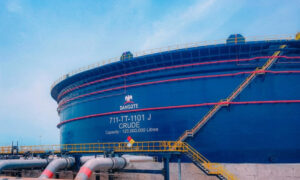
Nigeria’s downstream petroleum sector is facing renewed tension as oil marketers express sharply divided views over the Federal Government’s suspension of petrol import licences, a development that coincided with a fresh increase in the depot price of Premium Motor Spirit (PMS) by the Dangote Petroleum Refinery.
The refinery on Friday raised its ex-depot price of petrol to N1,175 per litre, reversing a price cut announced earlier in the week. The adjustment comes amid rising global crude oil prices that have significantly increased refining costs.
According to industry sources cited by The Punch, the refinery had earlier reduced its price to N1,075 per litre, a move that triggered heavy buying activity among petroleum depot operators. However, the latest surge in global oil prices forced a quick review of the pricing structure.
An internal notice circulated to marketers confirmed the revision and attributed the decision to ongoing geopolitical tensions affecting the global energy market.
“Due to the current global geopolitical situation which has further escalated, the PMS gantry and coastal prices have been reviewed,” the notice stated, according to reports referenced by The Nation Newspaper.
Under the revised structure, the refinery’s coastal supply price rose from N1,378,548 per metric tonne to N1,512,648 per metric tonne, representing an increase of about 9.7 percent, or N134,100 per metric tonne.
Industry sources told Petroleumprice.ng that the sudden upward adjustment created uncertainty across fuel depots, forcing several operators to temporarily suspend transactions while awaiting clarity on the new pricing structure.
One market source explained that many depot owners paused sales operations following the announcement.
“Several depots halted transactions immediately after the new price was announced as marketers assessed the implications for their existing supply agreements,” the source said.
Loading activities at the refinery were also reportedly slowed briefly to allow reconciliation of stock levels under the updated price regime.
Global Oil Market Pressures
Energy analysts say the development reflects the impact of rising crude oil prices on refining operations worldwide. Brent crude recently climbed above $100 per barrel, driven by escalating geopolitical tensions in the Middle East involving the United States, Iran, and Israel.
As noted in reports by Vanguard Nigeria, traders have added a “war premium” to global oil prices amid fears that potential disruptions around the Strait of Hormuz, a key oil transit route, could affect global supply chains.
Nigeria’s benchmark crude, Bonny Light, also surged above the $100 threshold during the week, further increasing production and refining costs.
Marketers Split Over Import Suspension
Meanwhile, the Federal Government’s decision to halt petrol import licences has sparked intense debate among petroleum marketers and energy experts.
The Nigerian Midstream and Downstream Petroleum Regulatory Authority (NMDPRA) recently indicated that local refineries now account for the bulk of Nigeria’s petrol supply. As a result, the regulator said it had not issued import licences during the first quarter of 2026.
The Vice President of the Independent Petroleum Marketers Association of Nigeria (IPMAN), Ahmed Fashola, backed the government’s decision, saying Nigeria should prioritise domestic refining.
“We support the position of the regulator because they have the data on national fuel supply and demand,” Fashola said in comments reported by The Guardian Nigeria.
According to him, increased reliance on local refining represents a major milestone for Nigeria’s energy sector.
“If we can supply more than 90 percent of our petrol locally, that means the country is making significant progress,” he said, praising the Dangote refinery’s contribution to stabilising fuel availability.
Fashola also argued that without local refining capacity, Nigeria could have faced severe fuel price shocks amid rising global tensions.
“If not for the Dangote refinery, the current geopolitical crisis could have pushed petrol prices in Nigeria to N3,000 or even N4,000 per litre,” he said.
Dealers Raise Supply Concerns
However, several major fuel importers and depot operators disagreed with the government’s position, arguing that local production alone cannot yet meet Nigeria’s daily petrol consumption.
Some marketers pointed to figures released by the NMDPRA, which indicate that the Dangote refinery produced about 36 million litres of petrol per day in February, while national consumption stood at roughly 56 million litres daily.
According to one dealer who spoke anonymously, the numbers reveal a significant supply gap.
“If Dangote produced 36 million litres and Nigeria consumed over 50 million litres daily, it clearly shows there was still a shortfall,” the marketer said, echoing concerns reported by BusinessDay Nigeria.
Another dealer warned that a complete ban on imports could create market distortions and reduce competition in the sector.
“We support local refining, but importation should still be allowed to prevent monopoly and ensure supply stability,” the marketer added.
Nigeria’s Shift Toward Local Refining
Nigeria has historically depended heavily on imported refined petroleum products due to limited domestic refining capacity, despite being one of Africa’s largest crude oil producers.
However, the commissioning of the 650,000-barrel-per-day Dangote Refinery, regarded as the largest in Africa, has significantly reshaped the dynamics of the country’s downstream sector.
The refinery began supplying petrol to the Nigerian market in September 2024, raising hopes that the country could gradually eliminate its reliance on imported fuel.
Recent data from the NMDPRA, cited by The Punch, shows that domestic refining accounted for roughly 92 percent of Nigeria’s petrol supply in February 2026, marking a major shift from previous years when imports dominated the market.
Still, industry stakeholders believe the transition to full local supply will take time as refining capacity continues to expand to meet the country’s estimated fuel demand.
TRENDING SONGS
 Sanwo-Olu Tours Massive Tolu Education Hub Set to Transform Learning for 20,000 Lagos Students
 Ghana Police Arrest 11 Nigerians in Tamale Crackdown on Drugs, Cybercrime
 Malami Breaks Silence on INEC–ADC Dispute, Urges Calm Amid Political Tensions
 £746m Nigeria–UK Deal Sparks Debate Over Ajaokuta Steel’s Future
 FG Kicks Off 56km Ekiti–Osun Link Road to Boost Regional Trade
 Tinubu Condemns Plateau and Kaduna Attacks, Calls for Urgent Action Against Violence
 Tonto Dikeh Opens Up on Dark Past: From Cult Involvement to Spiritual Renewal
 Alleged Truck Tampering Lands Lagos Man in Court Over Theft Claims
 Senegal Tightens Anti-LGBTQ Laws, Doubles Prison Terms Amid Rights Concerns
 Infantino Watches Iran Friendly Amid World Cup Venue Uncertainty
Share this post with your friends on