











Sanwo-Olu Unveils $25m Education Fund to Tackle Out-of-School Crisis in Lagos
Sanwo-Olu Unveils $25m Education Fund to Tackle Out-of-School Crisis in Lagos
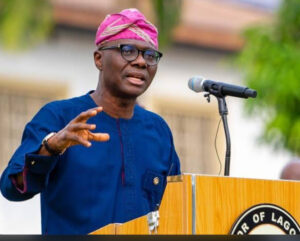
The Governor of Lagos State, Babajide Sanwo-Olu, has announced plans to introduce an executive order aimed at reducing the number of out-of-school children in the state while launching a $25 million education financing initiative designed to improve learning outcomes.
The governor made the announcement on Friday during the unveiling of the Lagos Education Access Fund (LEAF)and the inauguration of the board of the Lagos State Universal Basic Education Board.
According to reports by The Punch, Sanwo-Olu said the proposed executive order would prohibit school-age children from roaming the streets during school hours except in exceptional circumstances.
“No child should be found outside between 8:00 a.m. and 4:00 p.m. without a valid reason for being out of school,” the governor stated, adding that the directive would reinforce accountability among parents, communities, and institutions responsible for ensuring children attend school.
The newly launched LEAF programme will deploy $25 million in outcomes-based financing in partnership with the Education Outcomes Fund and other development partners. The initiative is expected to benefit more than 200,000 children across Lagos State.
Sanwo-Olu explained that the intervention will focus on enrolling over 50,000 out-of-school children aged between six and 14 into formal education through targeted community outreach and support systems aimed at removing barriers to schooling.
In addition, the programme will provide academic support for 150,000 pupils already enrolled in schools, with particular emphasis on improving literacy and numeracy skills.
“This initiative is not simply about increasing enrolment figures,” the governor said. “It is about ensuring that children who enter the classroom actually gain the knowledge and skills they need to succeed.”
Reports by The Guardian Nigeria noted that the programme builds on the state government’s earlier Project Zeroinitiative launched in 2021 to address the out-of-school children challenge.
According to Sanwo-Olu, the initiative has already helped identify and reintegrate more than 36,000 children back into the formal education system.
The governor also highlighted efforts to support families whose economic conditions prevent children from attending school. Through vocational training programmes, more than 360 parents and guardians have been trained in trades such as tailoring, catering, soap production, and hairdressing to strengthen household incomes and sustain children’s education.
Sanwo-Olu further revealed that the state government has significantly expanded educational infrastructure in recent years.
“We have built more schools and classrooms in the past seven years than were constructed in the previous two decades,” he said, adding that one newly completed school complex alone will accommodate nearly 20,000 students across 35 schools.
He emphasised that meaningful progress in education requires collaboration between government, development organisations, and private stakeholders.
Among the partners supporting the programme are the Children’s Investment Fund Foundation, the Federal Ministry of Education Nigeria, the Ministry of Foreign Affairs of Japan, and the Education Outcomes Fund.
Speaking at the event, the CEO of the Education Outcomes Fund, Amel Karboul, described Lagos as demonstrating bold leadership in education reform.
Karboul, a former Tunisian minister, noted that the initiative represents a shift from traditional education spending toward a model that prioritises measurable learning results.
“The most important infrastructure any country can build is educated minds,” she said, according to coverage by The Nation.
She explained that the outcomes-based model ties funding directly to measurable improvements in education rather than simply financing infrastructure or learning materials.
At the ceremony, Governor Sanwo-Olu also inaugurated a new LASUBEB board chaired by Hakeem Shittu.
Other board members include Saheed Ibikunle, Sijuade Idowu-Tiamiyu, Sherifat Adedoyin, Owolabi Falana, Adewale Babatunde, Babatunde Williams, and Hakeem Lamidi.
In his acceptance remarks, Shittu pledged that the board would prioritise three major objectives: expanding school access for vulnerable children, improving learning outcomes, and ensuring accountability in education spending.
“It is not enough for children to be physically present in classrooms,” he said. “They must receive quality education that prepares them for the future.”
Education analysts say the LEAF programme could become a model for other Nigerian states seeking innovative approaches to tackle the out-of-school children crisis while ensuring that education investments translate into measurable learning outcomes.
TRENDING SONGS
 Sanwo-Olu Tours Massive Tolu Education Hub Set to Transform Learning for 20,000 Lagos Students
 Ghana Police Arrest 11 Nigerians in Tamale Crackdown on Drugs, Cybercrime
 Malami Breaks Silence on INEC–ADC Dispute, Urges Calm Amid Political Tensions
 £746m Nigeria–UK Deal Sparks Debate Over Ajaokuta Steel’s Future
 FG Kicks Off 56km Ekiti–Osun Link Road to Boost Regional Trade
 Tinubu Condemns Plateau and Kaduna Attacks, Calls for Urgent Action Against Violence
 Tonto Dikeh Opens Up on Dark Past: From Cult Involvement to Spiritual Renewal
 Alleged Truck Tampering Lands Lagos Man in Court Over Theft Claims
 Senegal Tightens Anti-LGBTQ Laws, Doubles Prison Terms Amid Rights Concerns
 Infantino Watches Iran Friendly Amid World Cup Venue Uncertainty
Share this post with your friends on