












Trump Confirms Plans for National Emergency and Military Involvement in Mass Deportations
Trump Confirms Plans for National Emergency and Military Involvement in Mass Deportations
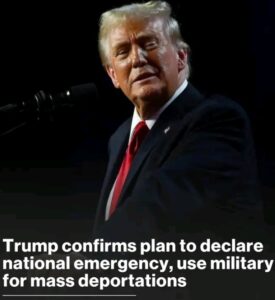
Donald Trump
President-elect Donald Trump has confirmed his intention to declare a national emergency to fulfill his campaign promise of mass deportations of undocumented migrants in the United States. Trump responded to a social media post by Tom Fitton of Judicial Watch, who had earlier suggested that the incoming administration was preparing such a declaration and considering the use of “military assets” for the operation. Trump’s response was a simple “TRUE!!!”
In his remarks, Trump reaffirmed his commitment to launching what he described as the largest deportation effort in U.S. history, beginning on his first day in office. “On Day 1, I will initiate the largest deportation program ever to remove criminals,” Trump stated at a rally during the final stretch of the 2020 presidential campaign. “I will rescue every city and town that has been overrun, put these dangerous criminals behind bars, and expel them from the country as quickly as possible.”
Trump’s immigration policies have already begun to take shape with the selection of several hard-line figures for key positions in his administration. South Dakota Governor Kristi Noem has been nominated as the Secretary of Homeland Security, pending Senate confirmation, and former Acting ICE Director Tom Homan has been appointed “border czar.”
Homan, who has previously discussed the mass deportation strategy, emphasized that the initial focus would be on removing criminals and national security threats, though he did not rule out deporting families. During his campaign, Trump had also proposed mobilizing the National Guard to support deportations, which experts noted could represent a significant shift in military roles, as the armed forces typically do not engage in domestic law enforcement activities. At times, Trump even suggested moving thousands of overseas military personnel to the U.S.-Mexico border.
The scale of the deportation effort could involve removing an estimated 11 million unauthorized immigrants living in the U.S. without legal status. This could result in significant financial costs, potentially running into billions of dollars annually, according to estimates from the American Immigration Council. Additionally, mass deportations could have serious economic consequences, including loss of tax revenue and labor shortages, especially in industries reliant on immigrant workers.
Martha Raddatz, ABC News’ Chief Global Affairs Correspondent, recently reported on the potential impact of Trump’s immigration policies, particularly on the American agricultural sector. “If you took away my workforce, you wouldn’t eat,” said Manuel Cunha Jr., president of the Nisei Farmers League. “If you go into the San Joaquin Valley and start doing what you’re saying, it’s over. The country will literally stop because the food system won’t function.”
TRENDING SONGS
 YOUNG FEMALE MORTICIAN REVEALS WHY MORTUARY ATTENDANTS KNOCK BEFORE ENTERING
 Sanwo-Olu Tours Massive Tolu Education Hub Set to Transform Learning for 20,000 Lagos Students
 Ghana Police Arrest 11 Nigerians in Tamale Crackdown on Drugs, Cybercrime
 Malami Breaks Silence on INEC–ADC Dispute, Urges Calm Amid Political Tensions
 £746m Nigeria–UK Deal Sparks Debate Over Ajaokuta Steel’s Future
 FG Kicks Off 56km Ekiti–Osun Link Road to Boost Regional Trade
 Tinubu Condemns Plateau and Kaduna Attacks, Calls for Urgent Action Against Violence
 Tonto Dikeh Opens Up on Dark Past: From Cult Involvement to Spiritual Renewal
 Alleged Truck Tampering Lands Lagos Man in Court Over Theft Claims
 Senegal Tightens Anti-LGBTQ Laws, Doubles Prison Terms Amid Rights Concerns
Share this post with your friends on