












UAE’s Ruwais Refinery Shuts After Drone Strikes Amid Middle East Conflict
UAE’s Ruwais Refinery Shuts After Drone Strikes Amid Middle East Conflict
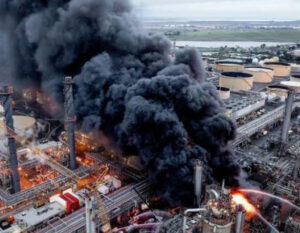
Operations at the Ruwais refinery, one of the world’s largest single-site facilities, were suspended on Tuesday as a precaution following a drone attack in the vicinity, sources said. The development comes amid escalating regional tensions that have already disrupted oil markets and global energy supply chains.
A source familiar with the matter, speaking on condition of anonymity, confirmed the shutdown but did not specify whether the refinery itself had been directly hit. Earlier, the Abu Dhabi Media Office reported that a drone strike sparked a fire in the Ruwais Industrial City, prompting evacuations of personnel.
The state owned Abu Dhabi National Oil Company (Adnoc) describes Ruwais as the world’s fourth-largest single-site refinery, underscoring its importance to both regional and global energy markets. Workers at the complex reported witnessing multiple bursts of fire resembling explosions, forcing immediate safety evacuations.
The attack is part of a broader campaign by Tehran targeting key Gulf energy installations amid its ongoing conflict with US-allied forces in the region. Saudi Arabia’s massive Ras Tanura refinery has also partially halted operations, and some Saudi oil fields have been targeted, highlighting the scale and reach of the attacks.
Speaking to media during the announcement of Saudi Aramco’s 2025 earnings, CEO Amin H. Nasser warned that the conflict could have “catastrophic consequences” for the global oil market. He emphasized the urgency of reopening the Strait of Hormuz, which carries roughly 20 percent of global oil supplies but has been disrupted by the ongoing war.
“The disruption has caused a severe chain reaction across shipping, insurance, aviation, agriculture, and automotive industries,” Nasser said. “While past interruptions have occurred, this is by far the largest crisis the region’s energy sector has faced.”
Oil prices have reacted sharply to the conflict, surging as much as 30 percent before adjusting slightly after US statements suggesting a potential resolution. Analysts say continued attacks on Gulf energy infrastructure could destabilize supply, inflate costs, and ripple across global markets.
Iranian strikes have also forced major energy producers such as QatarEnergy and some Kuwaiti operators to halt operations and declare force majeure, signaling that geopolitical disruptions may prevent countries from meeting export targets. Majed al-Ansari, a spokesman for Qatar’s foreign ministry, described the attacks on both sides as a “dangerous precedent” with global repercussions.
Aramco reported a 12.1 percent drop in net income in 2025, citing higher supply, US tariffs, and other economic pressures. The company also announced a $3 billion share buyback program over 18 months, marking its first initiative of this kind.
Energy analysts warn that as the conflict continues, the Gulf’s energy sector faces multi-layered threats, including production disruptions, impaired export routes, and storage constraints all of which could exacerbate volatility in the global oil market.
TRENDING SONGS
 Sanwo-Olu Tours Massive Tolu Education Hub Set to Transform Learning for 20,000 Lagos Students
 Ghana Police Arrest 11 Nigerians in Tamale Crackdown on Drugs, Cybercrime
 Malami Breaks Silence on INEC–ADC Dispute, Urges Calm Amid Political Tensions
 £746m Nigeria–UK Deal Sparks Debate Over Ajaokuta Steel’s Future
 FG Kicks Off 56km Ekiti–Osun Link Road to Boost Regional Trade
 Tinubu Condemns Plateau and Kaduna Attacks, Calls for Urgent Action Against Violence
 Tonto Dikeh Opens Up on Dark Past: From Cult Involvement to Spiritual Renewal
 Alleged Truck Tampering Lands Lagos Man in Court Over Theft Claims
 Senegal Tightens Anti-LGBTQ Laws, Doubles Prison Terms Amid Rights Concerns
 Infantino Watches Iran Friendly Amid World Cup Venue Uncertainty
Share this post with your friends on