












Tinubu Administration Allocates Additional N7 Billion for Aso Villa Solar Project Amid Nationwide Power Grid
Tinubu Administration Allocates Additional N7 Billion for Aso Villa Solar Project Amid Nationwide Power Grid

The federal government, under President Bola Tinubu, has earmarked an additional N7 billion for the solarisation of the Aso Rock Presidential Villa in 2026. The allocation, listed under the State House budget, is designated for the “provision of solarisation of Villa with solar mini grid.”
This follows the N10 billion set aside in 2025 for the same project, which aims to provide a reliable solar-powered energy system for the residence of the President and key officials at the State House.
The development comes amid ongoing power shortages experienced across Nigeria, prompting public debate over the timing and cost of the project. Critics argue that while ordinary Nigerians continue to face unstable electricity, the government’s decision to invest heavily in solar infrastructure for the President’s residence raises questions about priorities.
In response to criticism, Presidential spokesperson Bayo Onanuga defended the initiative, stating that the project aligns with international standards. “The White House in Washington D.C. also uses solar power. We are following a globally accepted model for sustainably powering critical national institutions,” Onanuga said on his verified X account.
The urgency for alternative power solutions in the State House is highlighted by recurring collapses of the national electricity grid. In April 2025, a grid failure caused total generation to drop sharply from 2,052.37 MW to just 139.92 MW within an hour, leaving most distribution companies without supply. Only Ibadan, Abuja, and Benin DisCos received limited allocations, while major cities including Lagos, Enugu, Port Harcourt, and Kano experienced complete blackouts.
Similar outages have occurred repeatedly, including major collapses in March and September 2025, demonstrating the fragility of Nigeria’s power infrastructure. These incidents show that even as the country records occasional increases in generation capacity, the grid remains vulnerable to sudden failures that disrupt electricity to homes, businesses, and essential services.
The additional N7 billion budget for the Aso Villa solar project underscores the Tinubu administration’s strategy to secure sustainable power for critical government operations, while raising questions about how quickly such solutions will reach ordinary Nigerians struggling with daily electricity shortages.
TRENDING SONGS
 YOUNG FEMALE MORTICIAN REVEALS WHY MORTUARY ATTENDANTS KNOCK BEFORE ENTERING
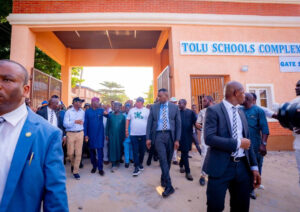 Sanwo-Olu Tours Massive Tolu Education Hub Set to Transform Learning for 20,000 Lagos Students
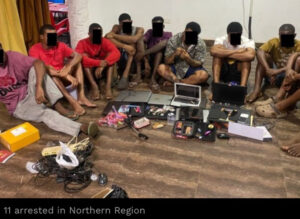 Ghana Police Arrest 11 Nigerians in Tamale Crackdown on Drugs, Cybercrime
 Malami Breaks Silence on INEC–ADC Dispute, Urges Calm Amid Political Tensions
 £746m Nigeria–UK Deal Sparks Debate Over Ajaokuta Steel’s Future
 FG Kicks Off 56km Ekiti–Osun Link Road to Boost Regional Trade
 Tinubu Condemns Plateau and Kaduna Attacks, Calls for Urgent Action Against Violence
 Tonto Dikeh Opens Up on Dark Past: From Cult Involvement to Spiritual Renewal
 Alleged Truck Tampering Lands Lagos Man in Court Over Theft Claims
 Senegal Tightens Anti-LGBTQ Laws, Doubles Prison Terms Amid Rights Concerns
Share this post with your friends on