






The Adeleke Question: Can Personal Popularity Defeat Political Structure in Osun?
 *The Adeleke Question: Can Personal Popularity Defeat Political Structure in Osun?*
*By Kolade Ismail*
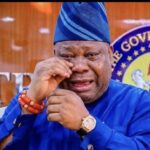
Governor Ademola Adeleke’s recent interview with Seun Okinbaloye on Channels Television was engaging, revealing, and politically significant. Beyond the issues discussed, perhaps the most notable aspect of the interview was what it signified about the governor’s communication style. For the first time in a long while, Governor Adeleke appeared to step out of the communication cocoon that has often defined his administration’s public engagement. Rather than speaking through carefully prepared statements issued by aides, he personally defended his record, articulated his positions, and responded directly to probing questions from a seasoned journalist.
That, in itself, was a welcome development. In every democracy, citizens deserve to hear directly from their elected leaders. Governance is not only about making decisions; it is also about explaining them. For a governor who has often been defined more by his public persona than by his direct engagement on policy matters, the interview showcased a level of confidence and political maturity that many had not previously associated with him.
However, one particular response during the interview deserves closer scrutiny.
When asked about the implications of the internal crisis within the Peoples Democratic Party (PDP) and his eventual alignment with the Accord Party ahead of the 2026 governorship election, Governor Adeleke made a striking assertion. According to him, his political success has never depended on party structures but on his personal popularity.
To support his argument, he recalled his departure from the All Progressives Congress (APC) after he was denied the opportunity to replace his late brother, Senator Isiaka Adeleke, as the party’s senatorial candidate. He noted that he subsequently joined what was then considered a weakened PDP and still managed to win elections in nine out of the ten local government areas in Osun West Senatorial District.
The governor’s conclusion was straightforward: the people love him, and that affection will once again deliver victory in 2026.
It is a position that reflects enormous confidence, but it also raises important questions about the nature of electoral success and the role of political structures in sustaining it.
Every electoral victory rests on two essential pillars: the appeal of the candidate and the effectiveness of the political structure behind that candidate. Charismatic politicians may attract public support, but political networks transform goodwill into actual votes. Elections are not won by popularity alone. They require the coordinated efforts of party executives, ward leaders, polling agents, canvassers, volunteers, financiers, and grassroots mobilisers who spend months building momentum and sustaining voter engagement.
Listening to the governor’s explanation, one could easily conclude that his political rise was largely a solo accomplishment. Yet history offers a more nuanced account. The political leaders, stakeholders, and countless foot soldiers who traversed communities across Osun State invested enormous energy, resources, and political capital in the effort that eventually unseated an incumbent government in 2022. Politics, by its very nature, is a collective enterprise. No political movement can afford to consistently overlook those who contributed to its success.
This reality may partly explain why several political heavyweights who played significant roles in securing Adeleke’s victory have since left the PDP for the APC. Political organisations thrive on inclusion, recognition, and a sense of shared ownership. When committed members feel sidelined or unappreciated, dissatisfaction inevitably follows. Loyalty remains one of the most valuable currencies in politics, but it must be continually reinforced by acknowledgment and engagement.
The governor’s remarks also revive another recurring issue in Osun politics: the perception that development under his administration has been disproportionately concentrated in Ede, his hometown. Whether this perception is entirely justified remains open to debate. Supporters point to projects executed across various parts of the state and dismiss such criticisms as politically motivated. Critics, however, argue that the prominence of the Adeleke family in the state’s political and developmental landscape reinforces concerns about uneven attention. In politics, perception often carries as much weight as reality, and such concerns cannot simply be ignored.
Beyond these issues lies a broader question that extends beyond Osun State: Can personal popularity alone win a statewide election?
Political history across Nigeria suggests otherwise. Governors and political leaders once considered unbeatable have lost elections after party structures weakened, alliances collapsed, or influential local leaders defected. Statewide elections are ultimately decided ward by ward and polling unit by polling unit. No politician, regardless of personal appeal, can simultaneously campaign in every community or maintain direct influence across every constituency. That responsibility falls to political structures and trusted local actors who mobilise support at the grassroots level.
Moreover, no single political figure enjoys overwhelming dominance across every geopolitical zone within a state. Each zone possesses its own unique dynamics, interests, and political calculations. These realities make statewide elections fundamentally different from mere popularity contests.
As the 2026 governorship election approaches, Governor Adeleke enters the contest with clear advantages. He enjoys the benefits of incumbency, widespread name recognition, and a loyal support base. Yet elections are determined by present realities rather than past achievements. The departure of former allies, the weakening of traditional political structures, and the emergence of new alignments have significantly altered the political landscape.
The governor’s faith in his personal popularity will therefore face its most consequential test. Can popularity compensate for a fractured political machinery? Can personal goodwill overcome the loss of influential grassroots organisers? Can a candidate secure victory across diverse political blocs without the network that previously contributed to his success?
Governor Adeleke deserves credit for engaging directly with the public and demonstrating a willingness to answer difficult questions. His interview reflected a commendable openness that should be encouraged in democratic governance. Yet it also revealed a political philosophy that places considerable emphasis on personal appeal over collective organisation.
Whether that philosophy can withstand the realities of a fiercely contested election remains to be seen. In politics, charisma may attract attention and energise supporters, but enduring electoral success is most often achieved when personal popularity is matched by strong political structures. The August 2026 governorship election may ultimately determine which of these factors proves more decisive in Osun State.
*Kolade Ismail, a politician & public affairs commentator writes from Ode-Omu, in Boluwaduro Local Government Area in Osun.*
TRENDING SONGS
 YOUNG FEMALE MORTICIAN REVEALS WHY MORTUARY ATTENDANTS KNOCK BEFORE ENTERING
 Sanwo-Olu Tours Massive Tolu Education Hub Set to Transform Learning for 20,000 Lagos Students
 Ghana Police Arrest 11 Nigerians in Tamale Crackdown on Drugs, Cybercrime
 Malami Breaks Silence on INEC–ADC Dispute, Urges Calm Amid Political Tensions
 £746m Nigeria–UK Deal Sparks Debate Over Ajaokuta Steel’s Future
 FG Kicks Off 56km Ekiti–Osun Link Road to Boost Regional Trade
 Tinubu Condemns Plateau and Kaduna Attacks, Calls for Urgent Action Against Violence
 Tonto Dikeh Opens Up on Dark Past: From Cult Involvement to Spiritual Renewal
 Alleged Truck Tampering Lands Lagos Man in Court Over Theft Claims
 Senegal Tightens Anti-LGBTQ Laws, Doubles Prison Terms Amid Rights Concerns
Share this post with your friends on