












How Nigeria Loses 86,700 Hectares of Forest in Nine Years – FG
How Nigeria Loses 86,700 Hectares of Forest in Nine Years – FG
The Minister of State for the Environment, Dr. Iziaq Salako, has revealed that Nigeria lost 86,700 hectares of tropical forest between 2010 and 2019. This disclosure was made in a statement to commemorate World Environment Day, celebrated annually on June 5.
“Land degradation, drought, and desertification have long been major issues in Nigeria,” Salako noted. “Between 2010 and 2019, Nigeria lost 86,700 hectares of tropical forest, according to Global Forest Watch statistics. If no immediate action is taken, an additional 25 percent of our remaining forest could vanish by 2060, turning much of our country into degraded land. We cannot allow this to happen.”
He highlighted that Nigeria’s Long-Term Low Emission Development Strategy and the Deep Decarbonisation Report identified the AFOLU sector as the highest contributor to emissions (30 percent), compared to the oil and gas sector (29 percent).
The minister emphasized that nature-based solutions are a priority for addressing global warming, enhancing climate resilience, combating poverty, and achieving long-term development in line with President Bola Tinubu’s Renewed Hope Agenda and the eight presidential priority areas.
Salako stated, “Nigeria aims to transform its energy sector and also needs to transform the AFOLU sector to meet its net-zero commitment by 2060, enabling economic growth and sustainability.”
He noted that Nigeria is committed to advancing nature-based solutions, such as ecosystem restoration and sustainable management, to address land degradation and climate change. Current initiatives include the REDD+ programme, the Great Green Wall Initiative, the ACReSAL project, natural capital accounting, and the HYPREP mangrove restoration in Ogoniland.
Salako also called for substantial climate financing from wealthy countries to support nature-based solutions globally, viewing such expenditures as investments rather than donations. He highlighted the importance of carbon trading and other investments in funding climate action in developing countries, which Nigeria will advocate for at COP29 in Azerbaijan.
“As Nigeria prepares to submit revised NDCs in 2025, we will ensure that nature-based solutions remain central to our climate strategy, addressing both climate change mitigation and the livelihood needs of our citizens, particularly in rural areas, and attracting much-needed climate finance,” he added.
TRENDING SONGS
 YOUNG FEMALE MORTICIAN REVEALS WHY MORTUARY ATTENDANTS KNOCK BEFORE ENTERING
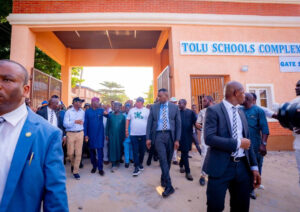 Sanwo-Olu Tours Massive Tolu Education Hub Set to Transform Learning for 20,000 Lagos Students
 Ghana Police Arrest 11 Nigerians in Tamale Crackdown on Drugs, Cybercrime
 Malami Breaks Silence on INEC–ADC Dispute, Urges Calm Amid Political Tensions
 £746m Nigeria–UK Deal Sparks Debate Over Ajaokuta Steel’s Future
 FG Kicks Off 56km Ekiti–Osun Link Road to Boost Regional Trade
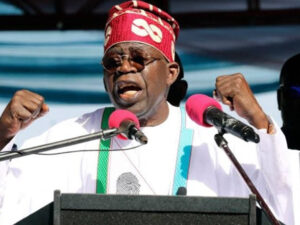 Tinubu Condemns Plateau and Kaduna Attacks, Calls for Urgent Action Against Violence
 Tonto Dikeh Opens Up on Dark Past: From Cult Involvement to Spiritual Renewal
 Alleged Truck Tampering Lands Lagos Man in Court Over Theft Claims
 Senegal Tightens Anti-LGBTQ Laws, Doubles Prison Terms Amid Rights Concerns
Share this post with your friends on