












HOW A 21-YEAR-OLD FEMALE UNIOSUN STUDENT RISKS A FIVE-YEAR JAIL TERM OVER HER CONFESSION TO HAVE BYPASS SOMEONE’S iPHONE DATA BREACH
HOW A 21-YEAR-OLD FEMALE UNIOSUN STUDENT RISKS A FIVE-YEAR JAIL TERM OVER HER CONFESSION TO HAVE BYPASS SOMEONE’S iPHONE DATA BREACH

A 21-year-old female student of Osun State University, Ipetu Ijesa Campus, is reportedly facing serious legal consequences following allegations which she later admitted that she unlawfully accessed and tampered with another person’s mobile phone, whereby she copied messages from the person’s whatsapp to her phone, without knowing her intent.
The 300-level student from the Department of Arts and Social Sciences Education, English Unit, is alleged to have bypassed security protocols on an iPhone 14 Pro Max, gained unauthorised access to the person private information, and copied sensitive personal information with the intent to damage the phone owner. If proven in court, such actions go beyond a campus dispute; they amount to a grave violation of digital privacy under Nigerian law.
In today’s interconnected world, a mobile phone is not merely a communication tool. It is a vault of confidential data, financial records, personal conversations and sensitive materials. Intruding into such a device without authorisation is not a prank, not a harmless experiment, and certainly not a trivial act. It is a criminal offence.
The Cybercrime (Prohibition, Prevention, etc.) The Act, 2015 clearly criminalises unlawful access to computer systems and digital devices. Unauthorised access, data interference, and attempts to manipulate digital content for wrongful purposes attract severe penalties. Conviction under relevant provisions of the Act carries a potential prison term of up to five years.
Legal analysts emphasise that intent plays a critical role. Where access is allegedly gained for the purpose of copying information and framing another individual, the gravity of the offence increases significantly. The law does not excuse digital misconduct based on age, ignorance or academic status. Being a student does not place anyone above statutory provisions.
This case serves as a cautionary tale. In the digital age, curiosity without caution can quickly transform into criminal liability. Actions carried out behind a screen leave trails, and the law is increasingly equipped to trace, investigate and prosecute cyber-related offences.
As the matter is expected to be charged to court on Wednesday, the 4th of March, all eyes will be on the judicial process. The principle of fair hearing remains fundamental, and the accused retains the right to defend herself before a competent court of law. However, the broader lesson is unmistakable: there is no legal defence for deliberate intrusion into another person’s private digital life.
The case is a vital reminder to young Nigerians and social media users alike. Digital access is not a game. Privacy is protected by law. And when lines are crossed, the consequences can be far-reaching.
The court proceedings ahead will determine the legal outcome, but the message is already clear cyber intrusion is a risk that can cost far more than imagined.
TRENDING SONGS
 YOUNG FEMALE MORTICIAN REVEALS WHY MORTUARY ATTENDANTS KNOCK BEFORE ENTERING
 Sanwo-Olu Tours Massive Tolu Education Hub Set to Transform Learning for 20,000 Lagos Students
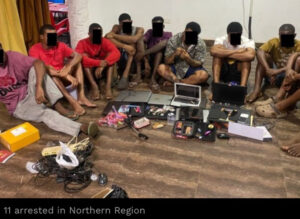 Ghana Police Arrest 11 Nigerians in Tamale Crackdown on Drugs, Cybercrime
 Malami Breaks Silence on INEC–ADC Dispute, Urges Calm Amid Political Tensions
 £746m Nigeria–UK Deal Sparks Debate Over Ajaokuta Steel’s Future
 FG Kicks Off 56km Ekiti–Osun Link Road to Boost Regional Trade
 Tinubu Condemns Plateau and Kaduna Attacks, Calls for Urgent Action Against Violence
 Tonto Dikeh Opens Up on Dark Past: From Cult Involvement to Spiritual Renewal
 Alleged Truck Tampering Lands Lagos Man in Court Over Theft Claims
 Senegal Tightens Anti-LGBTQ Laws, Doubles Prison Terms Amid Rights Concerns
Share this post with your friends on